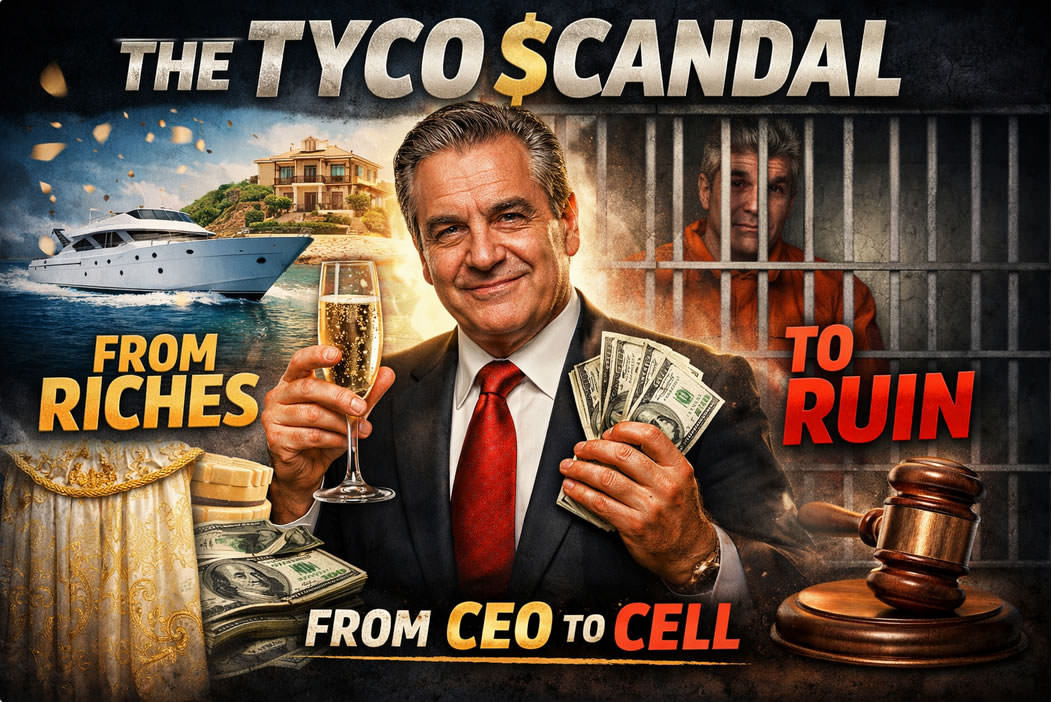
Dennis Kozlowski once threw a $2 million birthday party for his wife on the Italian island of Sardinia. Tyco money was used for parts of it, including performances and decor that became infamous in court testimony.
One of the most quoted symbols of the scandal was a $6,000 shower curtain. Prosecutors used it to show how casually company funds were spent on personal luxuries.
Tyco International itself was not a scam company. It was profitable and operationally sound, which made the alleged looting more disturbing to investors and regulators.
Kozlowski’s first trial ended in a mistrial after one juror reportedly made a “thumbs-up” gesture to the defense. The moment became tabloid gold.
When he was eventually convicted, Kozlowski was sentenced to 8 to 25 years in prison, one of the harshest sentences ever handed down to a corporate executive at the time. His name became shorthand for early-2000s corporate greed, alongside Enron and WorldCom executives, even though the crimes were structurally different. After prison, Kozlowski largely disappeared from public life, but his case is still referenced whenever CEO pay packages and corporate excess make headlines.
At the height of the corporate boom, Dennis Kozlowski was running Tyco International, a massive and successful conglomerate with interests spanning electronics, healthcare, and security systems. On paper, the company was thriving. Behind the scenes, prosecutors say a very different story was unfolding.
According to court findings, Kozlowski and Tyco’s chief financial officer, Mark Swartz, allegedly took hundreds of millions of dollars in unauthorized compensation. These were not simple pay packages. They were disguised as bonuses, low interest loans that were later forgiven, and off the books perks that shareholders never approved.
Company money was also used to bankroll an extravagant personal lifestyle. Prosecutors detailed luxury homes, high end art, expensive jewelry, and over the top parties, all quietly charged back to Tyco. The spending was so excessive it quickly became shorthand for everything people hated about corporate greed at the time.
What made the scandal resonate was that Tyco itself was not a failing business. It was profitable and legitimate, which made the alleged looting even more shocking. Investors believed they were backing a powerhouse. Instead, they learned the top executives were allegedly siphoning off vast sums for themselves.
When the case finally exploded into public view, Kozlowski became a symbol of early 2000s corporate excess, a reminder of what happens when power, secrecy, and entitlement collide. Even years later, his name is still cited whenever conversations turn to executive greed and white collar crime gone wild.