Forever spoil alert: Why Danny Trejo keeps dying on screen (on purpose)
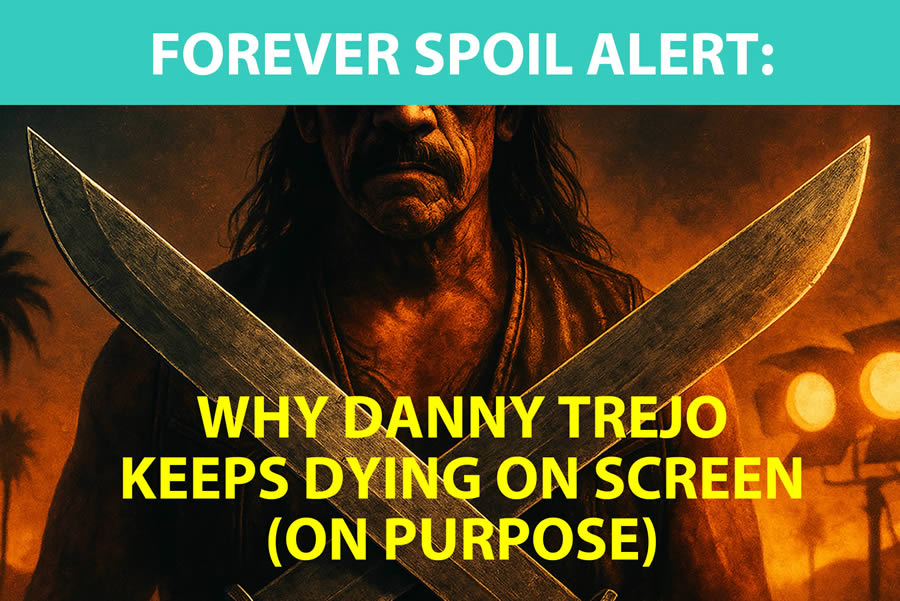
He’s Hollywood’s most famous heavy, but he won’t play a winner. The man behind those machetes insists his villains lose—so kids get the message that crime doesn’t pay.
Danny Trejo
He looks like trouble and plays it even better—but off camera, he’s the opposite: a stickler for consequences. For decades, the scar-faced icon of action B-movies and prestige projects alike has kept a simple rule: if he’s the villain, the villain doesn’t walk away. That’s not fan folklore. Trejo has said he refuses any script where the bad guy wins – he’ll either ask the writers to change it, or he’ll pass. The reason is moral, not macho: he wants young viewers to see that crime has a cost.
It’s a rule you can track right through his résumé. In Michael Mann’s Heat, he begs De Niro’s character to end his misery—one of his favorite exits. In Breaking Bad, he’s Tortuga, whose head winds up on a tortoise (you remember the rest). He’s been blown up, shot, decapitated, and—in the video game Like a Dragon: Infinite Wealth—even fed to a shark. Pick your poison; it almost always ends the same way.
All those finales add up. Various tallies over the years have put Danny Trejo at or near the top of Hollywood’s “most on-screen deaths” lists. A 2020 feature crowned him the all-time leader with 65 cinematic deaths; newer roundups shuffle the podium (voice legend Frank Welker has since been cited as #1), but Trejo still lands in the top tier, often at #2, with totals in the 90s as his filmography keeps growing. The specifics vary by methodology, but the headline doesn’t: he dies. A lot.
The personal code comes from a life he’s brutally honest about. Long before Machete or Spy Kids, Trejo cycled through California’s toughest prisons. After a 1968 riot left him staring down possible death-penalty charges, he got sober, found faith, and promised to live differently. That pivot eventually led him to set life and, by accident, to movie sets – first as a boxing trainer, then as the realest “heavy” casting directors had ever seen. He never forgot the kids watching, which is why his villains don’t get away with anything.
And while he’s famous for dying on screen, off screen he’s been building a very different legacy—restaurants, a memoir, and decades of recovery work and youth outreach. He’s talked for years about using the fame to reach people the system usually writes off. That’s the heart of his “no winning villains” rule: don’t glamorize what he’s spent his life warning others away from.
So, is the “contract clause” real?
Think of it as a hard-and-fast policy rather than a lawyerly clause. There isn’t a reputable, citable contract document in the public record—but there is a clear, on-the-record stance from Trejo himself that he won’t play a villain who wins, and a filmography that backs him up. That’s why you keep seeing him go out in spectacular fashion—by choice.