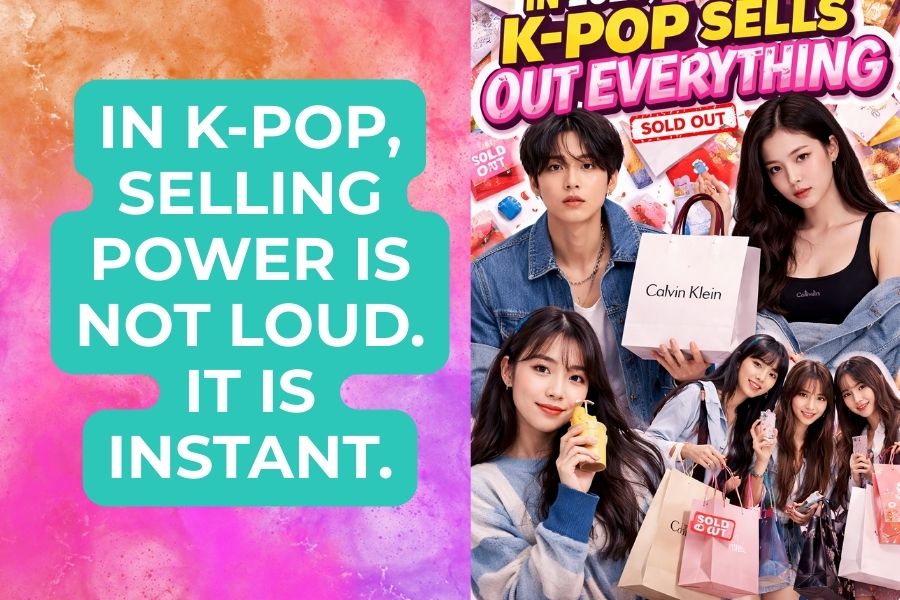
In K-pop, selling power is not loud. It is instant.
An idol steps outside with a bag. A photo drops. By the time fans figure out where it is from, it is gone. Not trending. Gone.
This year has been another reminder that K-pop does not move product slowly. It empties shelves in minutes.
Take Jungkook.
In early 2025, Calvin Klein items he wore casually, not even part of a formal campaign, sold out again across multiple regions. Retailers confirmed traffic spikes within minutes of photos circulating. This has become so predictable that fashion watchers now track Jungkook sightings the way investors track earnings calls.
Then there is Jennie.
Her continued partnership with Calvin Klein rolled into 2025 with new drops, and once again, select pieces disappeared almost immediately after release. This was not just fandom buying. Fashion buyers openly admitted that Jennie’s association drives non-K-pop consumers to purchase because her image sits somewhere between pop star and luxury tastemaker.
Food is no different.
When IU appeared in recent convenience-store campaigns tied to beverages and snacks, certain items saw immediate sell-outs at the store level. This has been happening for years, but in 2025 retailers openly acknowledge IU-related products require heavier inventory planning because demand hits all at once.
Then there is NewJeans, who might be the most dangerous group for brands right now.
Anything they touch becomes “sold out core.” From fashion accessories to casual lifestyle items, NewJeans-related products in 2025 have continued to vanish within hours of release. The group’s power is not luxury. It is relatability. Fans do not just want the item. They want the feeling of living inside the NewJeans world.
Even beauty brands are not immune.
In 2025, Korean cosmetic companies tied to idols like Jisoo and Cha Eun-woo reported recurring post-campaign shortages, especially in Asia. Lip products, skincare sets, even basic cleansers sold out faster than restocks could arrive.
And this is the part outsiders miss.
K-pop selling power is not persuasion. It is synchronization.
Fans buy together. They buy immediately. And they buy loudly, posting proof of purchase that pushes everyone else to rush in before it disappears. The product becomes a badge. If you hesitate, you miss it.
In 2025, brands no longer ask if K-pop works.
They ask if their supply chain can survive it.